 Brahmi.in
Why this matters: In many parts of India, the name “Brahmi” is used for both Bacopa monnieri and Centella asiatica (Gotu Kola). This has led to widespread confusion among consumers, practitioners, and even researchers. These two plants have different active compounds, different primary uses, and different safety profiles. Understanding the difference is essential for safe and effective use.
Quick Comparison Table
| Feature | Brahmi (Bacopa monnieri) | Gotu Kola (Centella asiatica) |
|---|---|---|
| Common Names | Water hyssop, Herb of grace, Neerbrahmi | Indian pennywort, Asiatic pennywort, Mandukaparni |
| Family | Plantaginaceae | Apiaceae (Umbelliferae) |
| Leaf Shape | Small, oblong to spoon-shaped, fleshy (succulent) | Round to kidney-shaped, thin, with scalloped edges |
| Leaf Texture | Smooth, thick, fleshy | Thin, delicate, palmately veined |
| Growth Habit | Creeping, rooting at nodes (stolons) | Creeping with long runners (stolons) |
| Flowers | White or pale purple, five petals, solitary, axillary | Pinkish-purple, small, in umbels |
| Primary Active Compounds | Bacosides A & B (triterpenoid saponins) | Asiaticoside, madecassoside, asiatic acid (triterpenoids) |
| Primary Use | Cognitive enhancement, memory, nerve tonic | Wound healing, skin health, venous circulation |
| Ayurvedic Classification | Medhya Rasayana (mind rejuvenative) | Medhya (intellect-promoting) + wound healer |
| Typical Dose | 300–600 mg standardized extract | 500–2000 mg dried herb or 30–60 mg triterpenoids |
Botanical Differences
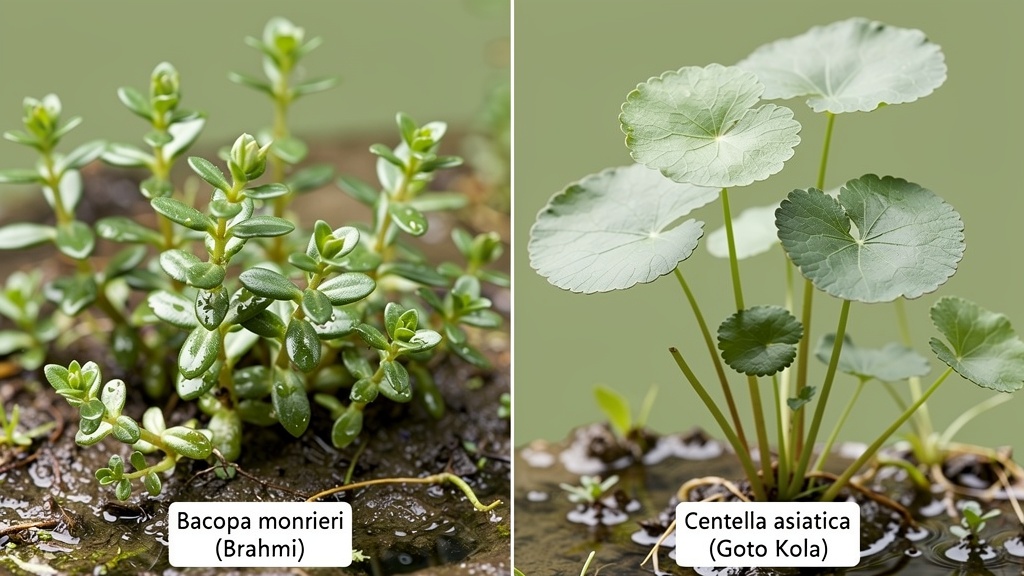
The easiest way to tell them apart is by looking at the leaves:
- Brahmi: Leaves are spoon-shaped (spatulate), small (0.6–2.5 cm), thick and succulent. They grow in opposite pairs along the stem. The leaf surface is smooth and the margins are entire (not toothed).
- Gotu Kola: Leaves are round to kidney-shaped, larger (2–5 cm), thin and delicate. The margins are scalloped (crenated) with prominent palmate veins. Leaves grow from the nodes with long petioles (leaf stalks).
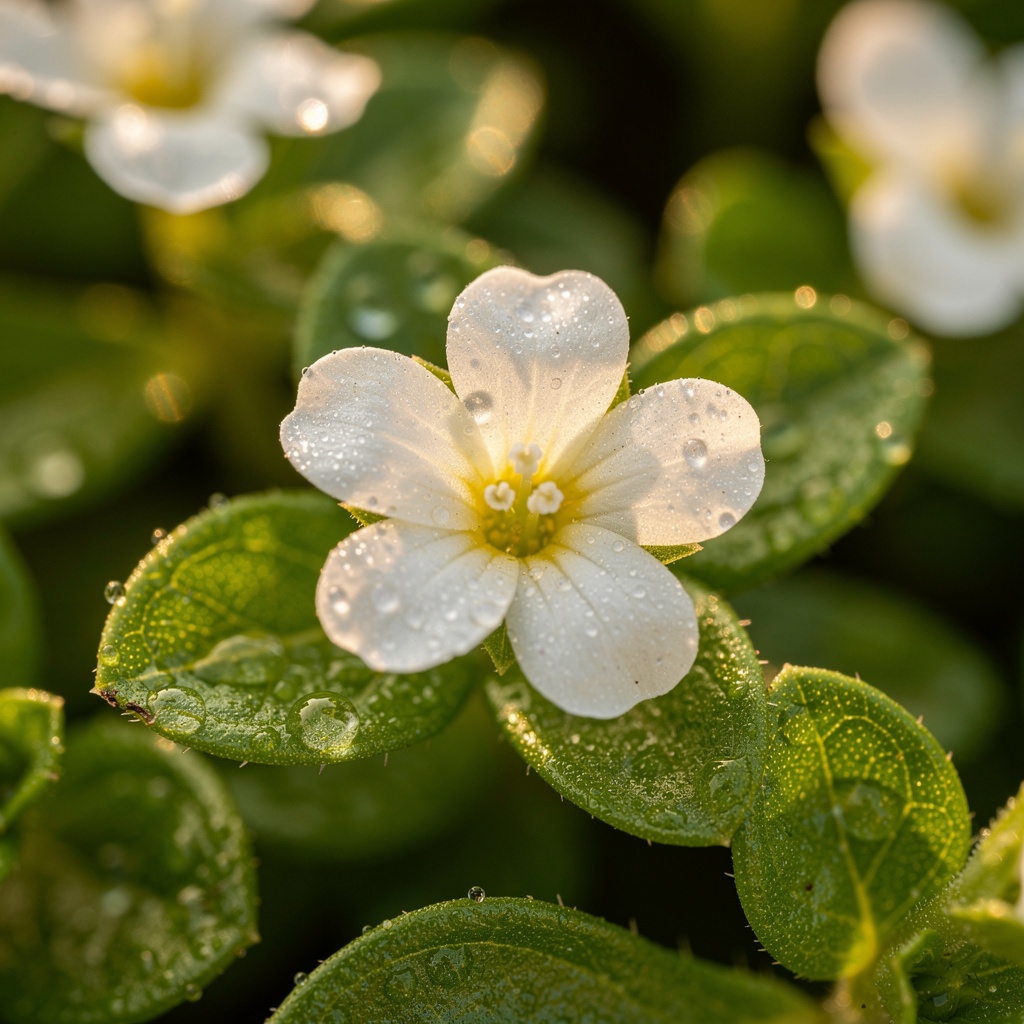
Flowers: Brahmi has solitary white five-petaled flowers; Gotu Kola has small pinkish-purple flowers in clusters (umbels).
Stem: Both creep, but Brahmi stems are thicker and more succulent.
Chemical Composition
| Compound Type | Brahmi | Gotu Kola |
|---|---|---|
| Primary active group | Bacosides (bacoside A3, bacopaside II, bacopaside X, etc.) | Pentacyclic triterpenoids (asiaticoside, madecassoside, asiatic acid) |
| Secondary compounds | Brahmine, herpestine (alkaloids), beta-sitosterol | Vallerine, hydrocotyline, flavonoids, tannins |
| Unique marker | Bacoside A is unique to Bacopa species | Asiaticoside is the key marker |
| Standardization | 20–55% bacosides | 60–80% total triterpenoids |
These chemical differences explain their distinct therapeutic profiles — bacosides primarily affect neural pathways, while asiaticoside and madecassoside primarily affect collagen synthesis and wound healing.
Traditional & Modern Uses
Brahmi — Cognitive & Nerve Tonic
- Traditional: Improves memory, concentration, and mental clarity. Used as a Medhya Rasayana in Ayurveda.
- Modern research: Memory enhancement, learning speed, anxiolytic effects, neuroprotection.
- Best for: Students, older adults concerned with cognitive decline, stressed individuals.
Gotu Kola — Skin, Wound Healing & Circulation
- Traditional: Wound healing, skin conditions, venous insufficiency, longevity.
- Modern research: Wound healing acceleration, collagen synthesis stimulation, improved venous tone, anti-cellulite, cognitive support (milder).
- Best for: Skin health, wound recovery, varicose veins, mild cognitive support.
Safety Comparison

| Safety Aspect | Brahmi | Gotu Kola |
|---|---|---|
| Pregnancy | Avoid — insufficient safety data | Avoid — possible uterotonic effects |
| Breastfeeding | Avoid — insufficient data | Avoid — insufficient data |
| Thyroid | May increase T4 levels — caution in hyperthyroidism | No known thyroid effects |
| GI side effects | Nausea, cramps, diarrhea (mild to moderate) | Usually well-tolerated; mild GI at high doses |
| Drug interactions | Anticholinergics, thyroid meds, sedatives | Anticoagulants, statins, antidiabetics (theoretical) |
| Liver toxicity | Very rare case reports | Very rare case reports |
Which One Should You Choose?
Your choice depends on your health goal:
- For memory, learning, and cognitive support: Choose Brahmi (Bacopa monnieri) — it has stronger evidence for cognitive outcomes.
- For wound healing, skin health, or varicose veins: Choose Gotu Kola (Centella asiatica).
- For general mental and physical rejuvenation: Both can be used together under professional guidance.
⚠️ Important: If a product is labeled only as “Brahmi,” check the scientific name on the label. If it lists Centella asiatica, you are buying Gotu Kola, not the Brahmi discussed on this site.
Navigating the Market
Because of the naming confusion, we recommend:
- Always check the scientific name on product labels
- Buy from reputable brands that clearly state Bacopa monnieri
- Look for standardized bacoside content on Brahmi products
- Be skeptical of products blending “Brahmi” and “Gotu Kola” without specifying quantities

Medical Disclaimer: This information is for educational purposes only. Consult a healthcare professional before using any herbal supplement.